

Our Diversified Research Portfolio
At the Ty Louis Campbell Foundation, our research portfolio is deliberately diversified to accelerate progress against the most aggressive childhood cancers. Over the past decade, we have strategically supported a range of initiatives—from basic studies of pediatric brain development and tumor biology, to translational projects leveraging cutting-edge techniques like direct drug delivery and CRISPR screens. We invest in young investigators, foster collaboration through new conferences and research networks, and support advances in precision medicine to bring new treatments to children in real time. Through partnerships with like-minded nonprofits and leading research institutions, every investment we make is designed to drive meaningful impact for children battling cancer today and into the future.

Our Diversified Research Portfolio
At the Ty Louis Campbell Foundation, our research portfolio is deliberately diversified to accelerate progress against the most aggressive childhood cancers. Over the past decade, we have strategically supported a range of initiatives—from basic studies of pediatric brain development and tumor biology, to translational projects leveraging cutting-edge techniques like direct drug delivery and CRISPR screens. We invest in young investigators, foster collaboration through new conferences and research networks, and support advances in precision medicine to bring new treatments to children in real time. Through partnerships with like-minded nonprofits and leading research institutions, every investment we make is designed to drive meaningful impact for children battling cancer today and into the future.
Supported by TLC

Multi Omics Precision Therapy Selection in Children with Malignant Brain Tumors
Expanding our footprint in advancing precision medicine for children with malignant brain tumors, we are funding Dr. Samuel H. Cheshier, MD, PhD, to lead an innovative precision medicine program at Intermountain Primary Children’s Hospital that tailors treatment to each child’s unique brain tumor.
Over the past four years, this approach has already been applied successfully to children at […]

Combined Epigenetic Targeting in ATRT (corin)
Dr. Eric Raabe of Johns Hopkins University is leading innovative research to tackle ATRT by addressing one of its root causes: faulty gene control that keeps tumor cells locked in an immature, aggressive state.
This preclinical project tests a promising new drug called corin, which targets a key epigenetic protein complex that ATRT cells rely on to survive. […]

Mapping Treatment Resistance in ETMR
Embryonal tumor with multilayered rosettes (ETMR) is one of the rarest and most aggressive brain tumors affecting very young children, and relapse is heartbreakingly common. Dr. Johannes Gojo of the Medical University of Vienna is leading a forward-thinking research project to understand why ETMR tumors return and how resistant cancer cells manage to survive treatment.
This preclinical study […]

Targeting CDK7 for ATRT Therapy
Atypical teratoid/rhabdoid tumors (ATRT) are rare, aggressive brain tumors that primarily affect very young children and have limited treatment options. Dr. Rajeev Vibhakar at the Children’s Hospital of Colorado is leading research to investigate a promising new approach by targeting a critical protein—called CDK7—that ATRT tumor cells depend on to grow and survive.
By blocking CDK7 using drugs […]

Gliomatosis Cerebri Conference – London 2025
In 2025, the Ty Louis Campbell (TLC) Foundation joined a small group of international families and foundations—collectively known as GC Global—to sponsor the 5th International Gliomatosis Cerebri Conference in London, United Kingdom. The meeting brought together 60 clinicians and researchers and 20 family members from around the world to share research updates, hear perspectives from […]

CRISPR Screens on Tumor Tissue
Identifying Key Drivers of Tumor Spread Using CRISPR Screening
The Children’s Brain Tumor Project at Weill Cornell Medicine leverages CRISPR technology to identify key drivers of tumor behavior. This advanced gene-editing technology can be used to manipulate tumor genomes, and systematically turn off genes in brain tumor cells. Under the mentorship of Drs Jeffrey Greenfield and Nadia Dahmane, the team is studying how changing the gene […]

Care for Rare Symposium 2025
CARE FOR RARE: A Global Strategy Meeting for ETMR and ATRT
In February 2025, the Ty Louis Campbell (TLC) Foundation brought together a carefully selected group of the world’s leading experts in Embryonal Tumors with Multilayered Rosettes (ETMR) and Atypical Teratoid/Rhabdoid Tumors (ATRT) for a focused, invitation-only strategy meeting in Playa del Carmen, Mexico.
This […]

Role of RP58 in the Loss of SMARCB1 in Atypical Teratoid Rhabdoid Tumors
The Ty Louis Campbell Foundation (TLC) provided $75,000 in 2023 to support the Dahmane Lab at Weill Cornell Medicine in their groundbreaking research on AT/RT, a rare and aggressive childhood brain tumor. This project focuses on understanding the interaction between a key tumor suppressor gene, SMARCB1, and the transcription factor RP58, which plays an important […]
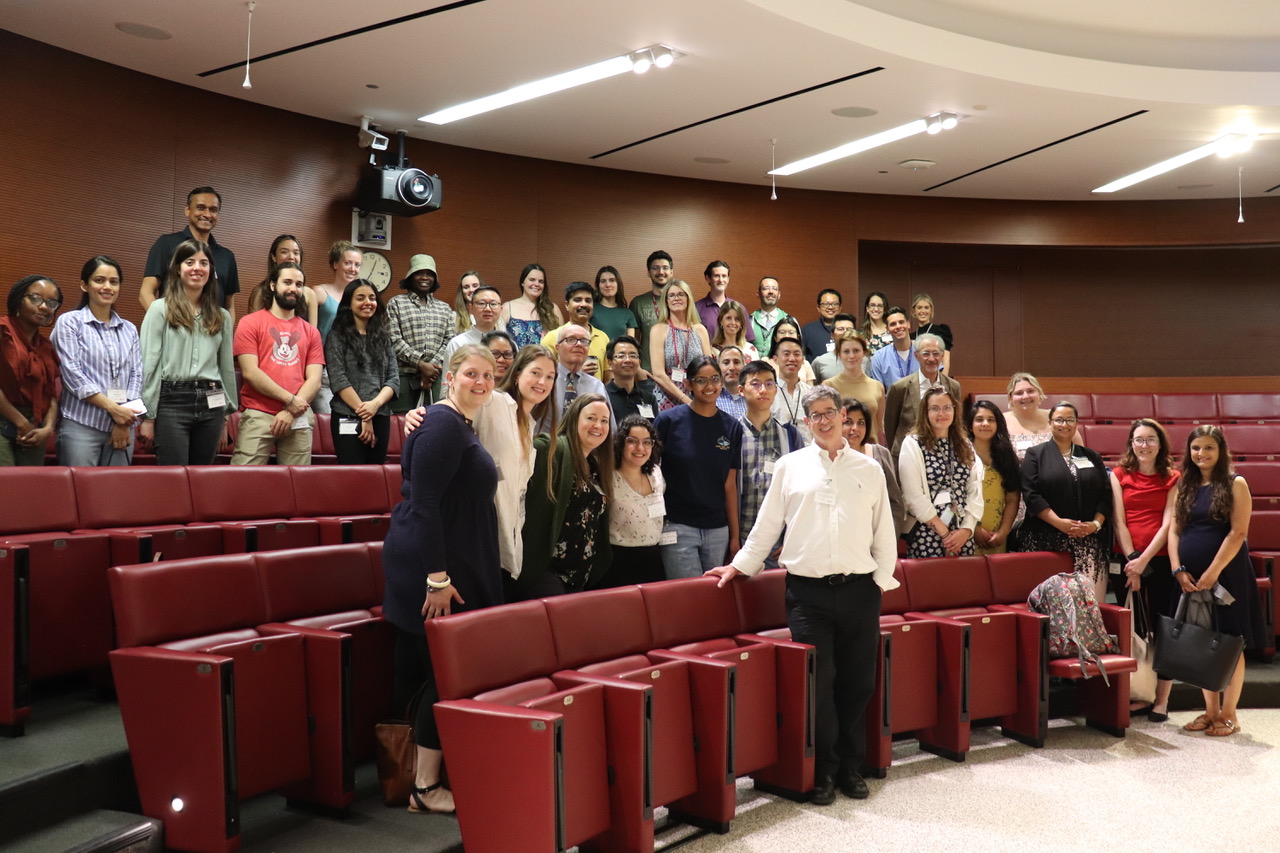
Pediatric Brain Tumor Research Network
Quarterly Research Conference in New York City
The Pediatric Brain Tumor Research Network (PBTRN) is a recent initiative in NYC led by Principal Investigator Dr. Robert Wechsler-Reya at Columbia University. The quarterly meeting was created in 2022 as a vehicle to bring together scientists and physicians from and around New York City who are interested in pediatric brain tumor research. The […]

Leptomeningial Dissemination in Rare Pediatric Brain Tumors
A much-anticipated article led by Children’s Brain Tumor Project (CBTP) postdoctoral fellows Carolina Cocito and Brice Martin, with Principal Investigators Dr. Nadia Dahmane, Dr. Jeffrey Greenfield, and Dr. Mark Souweidane, and collaborators at NewYork-Presbyterian/Columbia University, was recently published in the April special issue of Neoplasia dedicated to pediatric brain […]
Understanding Anti-CD47 and Radiation Effect on Group 3 Medulloblastoma
Huntsman Cancer Research Institute
In 2023, the Ty Louis Campbell (TLC) Foundation supported the project “Leveraging Super-Multi-Parameter Fluorescence Activated Cell Sorting Analysis to Obtain a Comprehensive Understanding of the Immune System Consequences of Irradiation and Anti-CD47 Treatments in Group 3 Medulloblastoma” with a $100,000 donation.
Medulloblastoma (MB) is the most common malignant primary brain tumor in children, and the Group 3 subtype of MB […]

Bispecific CAR T Cell Immunotherapy for Ph-like ALL
Translational Project Enabling Clinical Trial for High-Risk ALL Relapse
In 2023, the Ty Louis Campbell (TLC) Foundation committed $200,000 over two years to support a collaborative team of leading researchers at Children’s Hospital of Philadelphia and Children’s Hospital Colorado focused on Philadelphia chromosome–like (Ph-like) acute lymphoblastic leukemia (ALL)—a high-risk subtype with a relapse […]

Convection-Enhanced Delivery for DIPG
Diffuse intrinsic pontine glioma (DIPG) is one of the deadliest central nervous system tumors of childhood, with a median overall survival of less than 12 months. Convection-enhanced delivery has been proposed as a means to efficiently deliver therapeutic agents directly into the brainstem while minimizing systemic exposure and associated toxic effects. We did this study to evaluate the safety of convection-enhanced delivery of […]

Gift from a Child
Advancing Pediatric Brain Tumor Research Through Tissue Donation
The Ty Louis Campbell (TLC) Foundation is proud to continue supporting the Gift from a Child initiative, having contributed $100,000 to this vital program since 2020. Our funding helps support the role of Tissue Navigators at designated Centers of Excellence across the U.S., including Stanford, Children’s […]

Feasibility of Guided Therapy for Children with Relapsed Brain Tumors Using Organotypic Slice Culture (OSC) Drug Screening
When a child’s brain tumor relapses, families and physicians are often forced to make treatment decisions with little guidance. Fewer than 30% of children respond to chemotherapy at relapse, meaning many endure toxic treatments without benefit. Dr. Stergios Zacharoulis at Columbia University Irving Medical Center is leading an innovative effort to change that reality by identifying which treatments are most likely […]

Targeting Proteins CDK 7, 12, 13 Against Ewing Sarcoma
Ewing sarcoma is a bone cancer that is most frequently found in children and adolescents between the ages of 10 and 20 years old. Tumors often originate in the long, large bones of the body, including the hip, thigh, shin, chest, and arm bones.
Besides originating from the bone, sometimes this tumor can form just outside the bone in the soft tissue. The cancer can also metastasize to […]

Intrinsic and Acquired Glucocorticoid Resistance in T-cell ALL
University of California, San Francisco – In Partnership with the St. Baldrick’s Foundation
$195,000 over two years
Acute Lymphoblastic Leukemia (ALL) is the most common form of childhood cancer, and thanks to decades of research, most children diagnosed today are curable. Yet children whose leukemia returns after an initial response face high-risk, hard-to-treat disease, and many do not […]

International Rhabdoid Conference 2018, Lake Louise Canada
The TLC Foundation made a unique investment by supporting the 2018 International Rhabdoid Tumor Meeting in Lake Louise. Eighty-eight scientists from around the world gathered for a 2-day conference on rhabdoid tumors, with most of the focus being on Atypical Teratoid Rhabdoid Tumors (AT/RT). AT/RT is a rare pediatric brain tumor that claimed the life of Ty Louis Campbell, and that has been […]

Reimagining Clinical Trials for Children with Brain Tumors
Advancing Precision Medicine for Children with Cancer
The Ty Louis Campbell Foundation (TLC) has invested over $50,000 in the Children’s Brain Tumor Project at Weill Cornell Medicine, specifically supporting the groundbreaking research of Dr. Jeffrey Greenfield in precision medicine for children with brain tumors. Childhood cancers are rare, and each tumor is unique, which makes

Phase 1 Immunotherapy Trial Testing APX-005M in DIPG
After co-funding a highly successful international clinical trial that opened for enrollment in 2017, A Kids’ Brain Tumor Cure Foundation, Solving Kids’ Cancer, and the Ty Louis Campbell (TLC) Foundation teamed up again to announce their joint financial support of a Phase 1 clinical trial designed to test the safety and efficacy of a novel […]

Collaborative Advocacy Initiative Addressing Medulloblastoma
In Partnership with Solving Kids’ Cancer
Our partners at Solving Kids’ Cancer have long been advocating to influence clinical trial design. With the support of TLC, they have launched a strategic initiative that will help identify the projects that can be added to frontline treatments quickly and effectively through the creation of small pilot studies that produce actionable data. By securing partners in collaborative […]

Modified Measles Virus (MV-NIS) for Children and Young Adults With Recurrent Medulloblastoma or Recurrent ATRT
Oncolytic viruses (OVs) are promising therapeutic tools for solid tumors due to their many biological advantages compared to traditional approaches including: (1) the selective replication of the OVs in cancer cells without affecting normal cells; (2) the lack of resistance mechanism by the targeted cells and (3) the capacity of the OV to spread throughout the tumor once a few cells have […]
The Ty Louis Campbell Fellowship
Weill Cornell Medicine
In 2014, The TLC Foundation announced the launch of a new pediatric brain tumor research fellowship at the Weill Cornell Medicine Children’s Brain Tumor Project.
Led by Co-Directors Dr. Mark Souweidane and Dr. Jeffrey Greenfield, The Children’s Brain Tumor Project shares our mission to improve the outcome for children with brain tumors by advancing scientific discovery and clinical research. The Ty Louis […]

Checkpoint Inhibitors
Phase 2 International Clinical Trial
Multiple Centers (originally led by Memorial Sloan Kettering Cancer Center)
What began as a proposal for a clinical trial in four centers, has expanded into a worldwide clinical trial.
In 2016, the TLC Foundation, in collaboration with like-minded nonprofits A Kids’ Brain Tumor Cure and Solving Kids’ Cancer, provided the seed money for a phase 1 clinical trial for children with brain tumors […]

Combination anti-CD47 Immunotherapy
The Ty Louis Campbell (TLC) Foundation partnered with the St. Baldrick’s Foundation to support a three-year preclinical research project led by Dr. Samuel Cheshier at Stanford University and Huntsman Cancer Institute, providing $330,000 in funding. Based on highly promising preclinical results, TLC also contributed $15,000 in seed funding to help launch a


